Emotional Release Therapy is gentle, hands-on inner child work through the body — a way to meet the parts of you that got left behind, and welcome every one of them home.
Groups stay small on purpose. Tap any of them to read the full description.
One day, hands-on. Inner child work through the body — you learn a few of the foundational points and work on each other. The simplest way to find out what this actually is.
Read the full day → Next Retreat OpenA four-day live-in retreat with eight to twelve people. Guided ERT bodywork, inner child process, and time to let it settle.
Read the full retreat → Next School EnrollingAbout a year of training in a cohort of eight. A session, workshop, or retreat comes first, then registration and a deposit hold your place.
Read the full program →Looking for a one-on-one session? Find a practitioner near you →
Emotional Release Therapy is a type of hands-on bodywork — a creative synthesis of specific bodywork and inner child work. Points on the body are activated, and trapped emotions like fear, anger, or grief, held back because they were not safe or allowed, are given an opportunity to express.
The body has hundreds of points, or doorways, that have become "clogged" over the years. With breath, opening, and inner child work, the channels of the body are invited to clear that stagnant energy — memories can resurface, emotions can move, and we learn to embrace the wounded parts of ourselves, so we can be who we are meant to be: peaceful, loving beings.
Learn more about ERT →Meet the emotion your body has been holding — fear, grief, anger, even joy — and let yourself feel it fully.
Give it somewhere to go. Through the body, what was held back finally gets to move and be voiced.
None of it is done alone. You're met with warmth and held without judgment — seen exactly as you are.
The parts you set aside come home, and you walk back into your life more whole — more yourself.
You might not call it trauma. Maybe it's a tightness in the chest that never fully leaves, anger that rises faster than it should, the same relationships playing out no matter how well you understand them, exhaustion that sleep doesn't fix, or pain with no clear cause. ERT is hands-on somatic work for people who have done the talking — and still feel stuck.
Unprocessed emotion doesn't disappear — it gets stored, and what the body has stored, it can also release. When something overwhelms the nervous system, it braces to protect you: muscles tense, breath shortens. When the threat never fully resolves, that bracing can lock in — chronic tension, restricted breathing, unexplained pain, and a low sense that something isn't quite right. Modern trauma and nervous-system research describes it well: trauma lives in the body, and the nervous system has to feel safe before it can let go.
That's why every session begins at the heart — with presence and safety, because the body won't open what it's been guarding until it trusts that it's safe to. At the center of ERT is a map of points on the muscles and bones, called doorways, where held emotion has compressed into the tissue: grief that was never cried, anger never voiced, fear never discharged. With pressure, breath, and awareness, what's stored is brought to the surface — and you're guided not to analyze it, but to feel it fully and let it move through and out. Not analysis. Completion.
People often come to this work carrying:
Everyone's body is different and nothing here is promised — but these are the shifts people describe most often:
ERT is not medical or psychological treatment, and it doesn't diagnose, cure, or treat any condition. If you're dealing with pain or a health concern, keep working with your doctor — this work sits alongside that care, meeting the emotional and held-tension layer, not replacing it.
Emotional Release Therapy starts from a simple idea: the body remembers. Inside it are rooms where feelings were tucked away — sadness that was never seen, fear that was never heard, joy that was never safe to show.
ERT is hands-on. Points on the body are activated, and the emotion held there is given somewhere to go. Nothing is forced. You stay clothed, you stay in charge, and the pace is set by your own nervous system.
ERT sits alongside talk therapy rather than replacing it. Nothing here is diagnosis or treatment — it is a way back into the feeling body. Results vary from person to person.

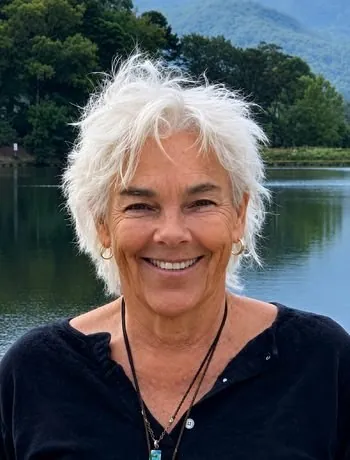
Pat Jackman, M.A., CMT, CHT, is the founder of Emotional Release Therapy and has been guiding this work for more than thirty years. She began as a counselor and social worker in 1977 and spent over two decades in that field before turning to bodywork, becoming an ERT practitioner and workshop leader in 1995.
Pat originally trained in Amanae, then evolved it through her own inner child work into what is now Emotional Release Therapy — a hands-on practice in which points throughout the body are opened so that fear, anger, grief, and even joy that were never safe to express can finally move. Her approach is intuitive rather than diagnostic. She does not analyze; she listens, feels, and helps people meet the parts of themselves they had to abandon.
Through the ERT School, Pat has trained small cohorts of practitioners now working across the United States and Canada, and she leads intimate live-in retreats of no more than twelve people. She still takes the occasional private client, in person only, though most of this work is now carried by the practitioners she has personally trained and selected.
Based in California and available for travel worldwide.
The One-Day Workshop
One Saturday, a small group, and your first real taste of the work.
This is the shortest way in. In a single day you will learn a handful of the foundational ERT release points, put your hands on another person, and have another person’s hands on you. It is not a lecture about the body — it is a day spent inside it.
All of it is inner child work. That is not one segment of the day — it is what ERT is. The points are simply how you get there: emotion parks itself in tissue, and the younger self who was never allowed to feel it is reached through the body rather than talked about from a chair.
The morning is teaching and gentle work — where the primary points sit, and how to touch someone in a way that invites rather than forces. By the afternoon you are working in pairs, taking turns, with Pat moving between you the whole time. People are often surprised how quickly something surfaces once the body has been opened and the room has gone quiet.
No experience is needed, and nothing is required of you beyond willingness. Come for your own healing, or come to find out whether the retreat or the practitioner school is your next step. Both are good reasons.
See how the day runs, what you leave with, and what to expect →
The Retreat
Four days, eight to twelve people, and enough time for something to actually move.
This is a live-in retreat built around Emotional Release Therapy. Through guided sessions, hands-on bodywork, movement, breath, and shared witness, you meet the parts of yourself that got put away — and give them somewhere to go.
Each day builds on the one before it. That matters: release tends to arrive after the nervous system decides it is safe, and safety takes time. Meals and lodging are handled so nothing pulls you out of your own process.
People come for their own healing, and some come because the retreat is the first step toward practitioner training. Either reason is a good one.
The School
Not a certificate you collect. A year of learning to hold the room for someone else.
The training teaches you the full ERT modality — the points, the process, and the presence it takes to work with someone in the middle of a release. It is body-based work, so it is taught in person, with real people, over a long enough stretch that it settles into your hands.
Plenty of people feel drawn to this. Fewer find it is their path, and that is fine. That first experience — a session, workshop, or retreat — exists partly so you can find out before you commit.
Dates are chosen by the group once it forms, because students travel a long way to attend. The whole program usually runs about a year or less.
A home, a studio, and gardens in Sebastopol, California — home to the school and the one-day workshops, and many of our retreats.
“This week has been beyond what I could have expected — the intensity of meeting all the parts of myself, the memories and aspects of the self that live in our bodies and never forget. I saw my inner children who all wanted to shout, scream, shiver, cry, and release all they held inside — and they were met with all they were lacking. The kindness, warmth, and vulnerability I was met with was beyond what I thought possible. Pure bliss and freedom comes from admitting our most honest truths and having pure love reflected back to you. I found reverence for this work, and sat wide-eyed as I witnessed its magic.” ♥ — Laura Woolf, workshop participant
Healing grows faster in safe soil, especially when tended with love. Pat Jackman
Questions about a retreat, the school, or finding a practitioner near you — this reaches Pat directly.